
Dev diary: dungeons that change every day
Short party dungeons with jumps, fights and puzzles, built fresh each day. Here's how they work so far, grey boxes and all.
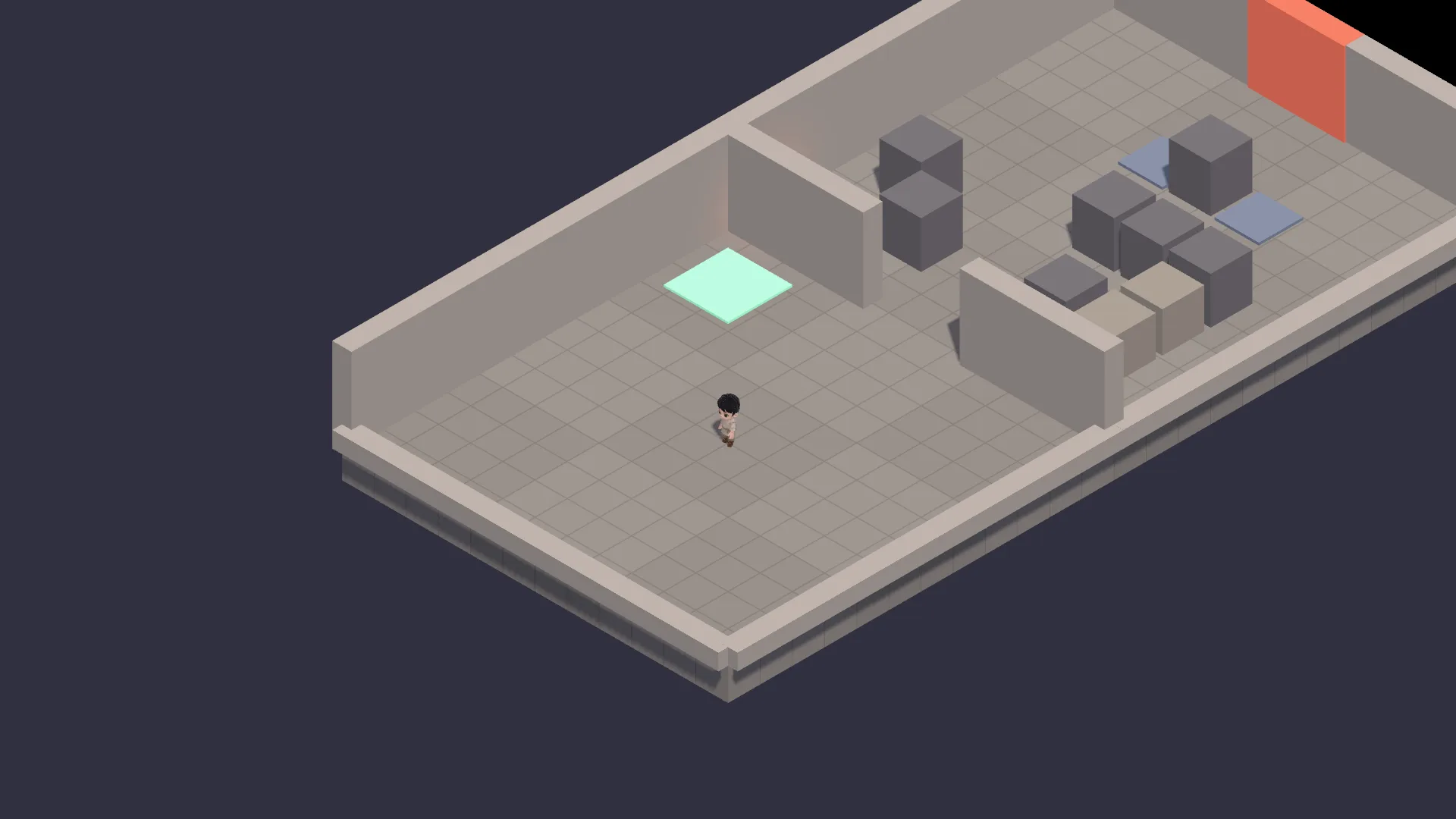
I’ve been building dungeons. Each one is a short run of 5 to 7 rooms for 1 to 4 players, about 10 to 15 minutes from the door to the boss. Each room could be a jump course, a fight, a puzzle or a quiet place to catch your breath. The layout changes every day.
Everything in these pictures is greybox, plain blocks standing in for the art.
A new dungeon every day
Each day the dungeon draws a new seed, and that one number decides which rooms appear, in what order, how the jumps are laid out, which enemies are waiting and which puzzles you get. Everyone gets the same dungeon that day, so you can compare runs with friends, or warn them about room four.
A run is planned before it’s built. First the game picks the rooms and how they connect: a start, then a mix of jumps, fights and puzzles, sometimes a side room with a key or some treasure, and the boss at the end. A solver walks the whole plan like a party would before the run is used, so a key never ends up behind the door it opens. Then the rooms are laid out on a grid, door to door.
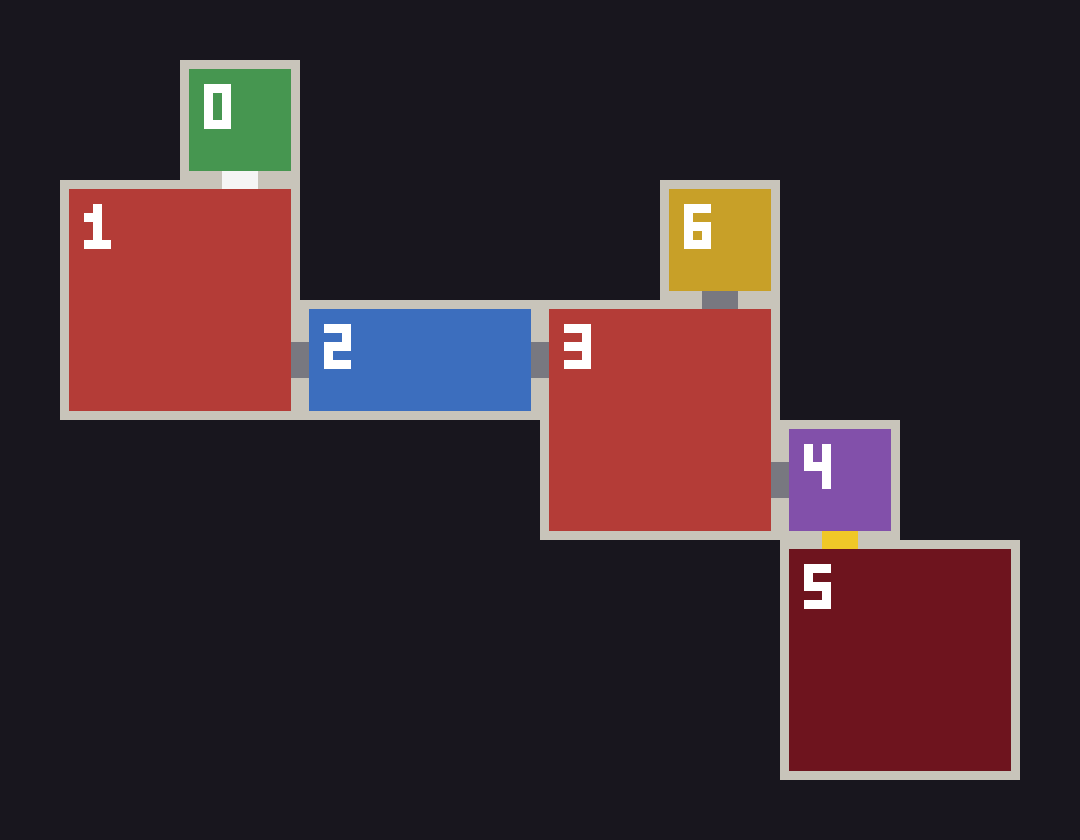
One day’s run, from my debug map. Green is the start, red rooms are fights, blue is a jump course, purple a puzzle, gold the side room holding the key, and dark red the boss. The gold door into the boss room needs that key.
Jumps built from your jump
The jump courses are made to fit the hero’s real jump: how fast you run, how high you go, how long you’re in the air. Every gap can be jumped, and no gap is so narrow that you can just walk over it.
To prove it, a bot plays every course through the real game, with the same physics as your hero. It runs, jumps just as it leaves the edge and lands. In my tests it cleared a thousand courses without one fall, and along the way it caught problems I’d missed, like a gap you could walk across diagonally. The bot is a very good player, so the real courses are built with room to spare for everyone else.
Some courses have a little more going on:
- Moving platforms and lifts, which wait long enough at each stop for you to jump on and off.
- Crumbling tiles that crack when you land and fall away a moment later, so don’t stand around.
- Spikes on a timer, with a warning before they come up.
- Levers on side paths. The gate to the exit opens when every lever is down. Some levers spring back after a few seconds, so the gate needs two people pulling at once: split up and time it.
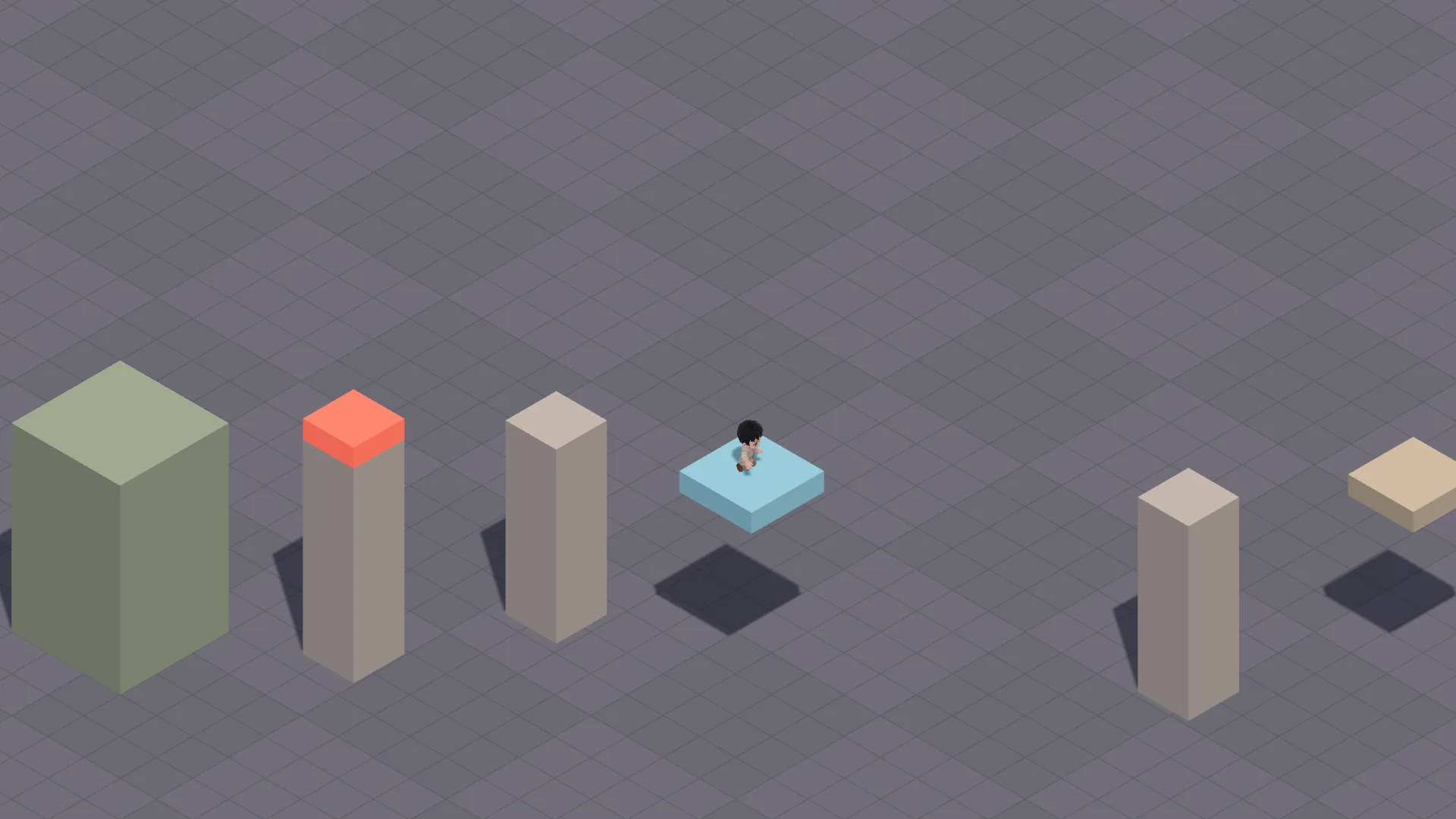
A test course, with plain boxes standing in for the traps until they get their art. The red-topped column is a spike trap, the tan slab on the right is a crumbling tile, and the hero is riding the blue moving platform.
The first puzzles
I’m starting with four kinds of puzzle and plan to add more. Every puzzle is built backwards from its answer, so every one has a solution. You can solve any of them on your own, and they go faster with a group.
- Brazier sequence. A mural shows four colours in order. Light the braziers to match. Light the wrong one and they all go out.
- Timed plates. Plates in the corners of the room each stay down for a few seconds after you step off. Get them all down at the same time.
- Rune stones. A ring of stones where touching one flips it and its neighbours. Light them all.
- Pushable blocks. Push stone blocks onto the plates, around pillars that never move. Push a block into a corner and it’s stuck there, so there’s a reset button that sends every block home.
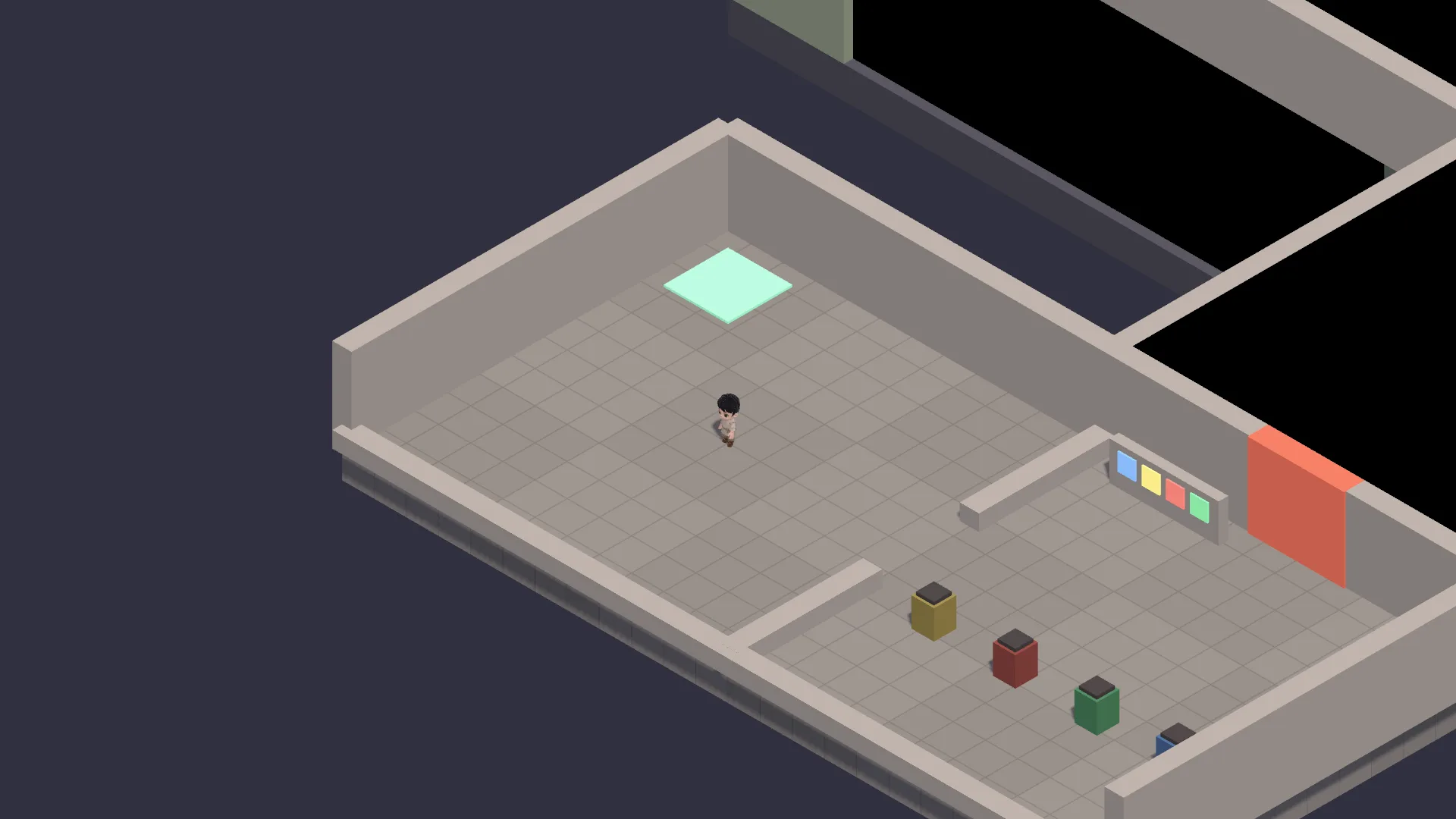
The brazier room. The mural by the far door shows the order. The black rooms beyond are still locked.
Block puzzles, graded ahead of time
Block puzzles made at random tend to come out either too easy or impossible, so the game doesn’t make them as you play. I built a library of them ahead of time. A solver finds the fewest pushes each puzzle needs, and the puzzles are sorted into easy, medium and hard by how many pushes they take and how often you have to switch blocks. The library has 300 so far, from about ten pushes to over thirty.
The dungeon takes them from the library based on where the room falls in the run: easy near the start, hard just before the boss. Each puzzle can also be rotated or mirrored, so you’ll rarely see the same one twice.
You can always see where you are
The camera looks down at an angle, so the walls between it and you are cut down to knee height and never hide your hero. Rooms you haven’t unlocked yet stay pitch black until their door opens, so you don’t see what’s inside before you get there.
What’s next
I want a dungeon for every kind of player. A relaxed difficulty is there for anyone who wants to wander through with friends, a harder one for players who want a real fight, and a daily leaderboard ranks the fastest clears for anyone racing the clock. Each one drops its own version of the same rewards, like a trophy with a different trim or a cosmetic in a different colour, so whichever way you like to play, you come away with something to show for it.
The art is next: a proper room kit to replace the grey boxes, with walls, floor tiles, pillars, braziers, traps and gates, and after that a second dungeon style set in caves. I’m also adding rolling boulders and flame jets (the jump bot gets to try them before you do), and fights that scale with how many of you there are.
I hope to wrap up the rest of this and have a dungeon ready for you to test this week.